



Safety guide: how to survive a portuguese man o' war sting
Hidden dangers: understanding the portuguese man o' war
Reading time: 1 minute, Discovery Chepe Id-837-ECO
Published on 04-06-2026
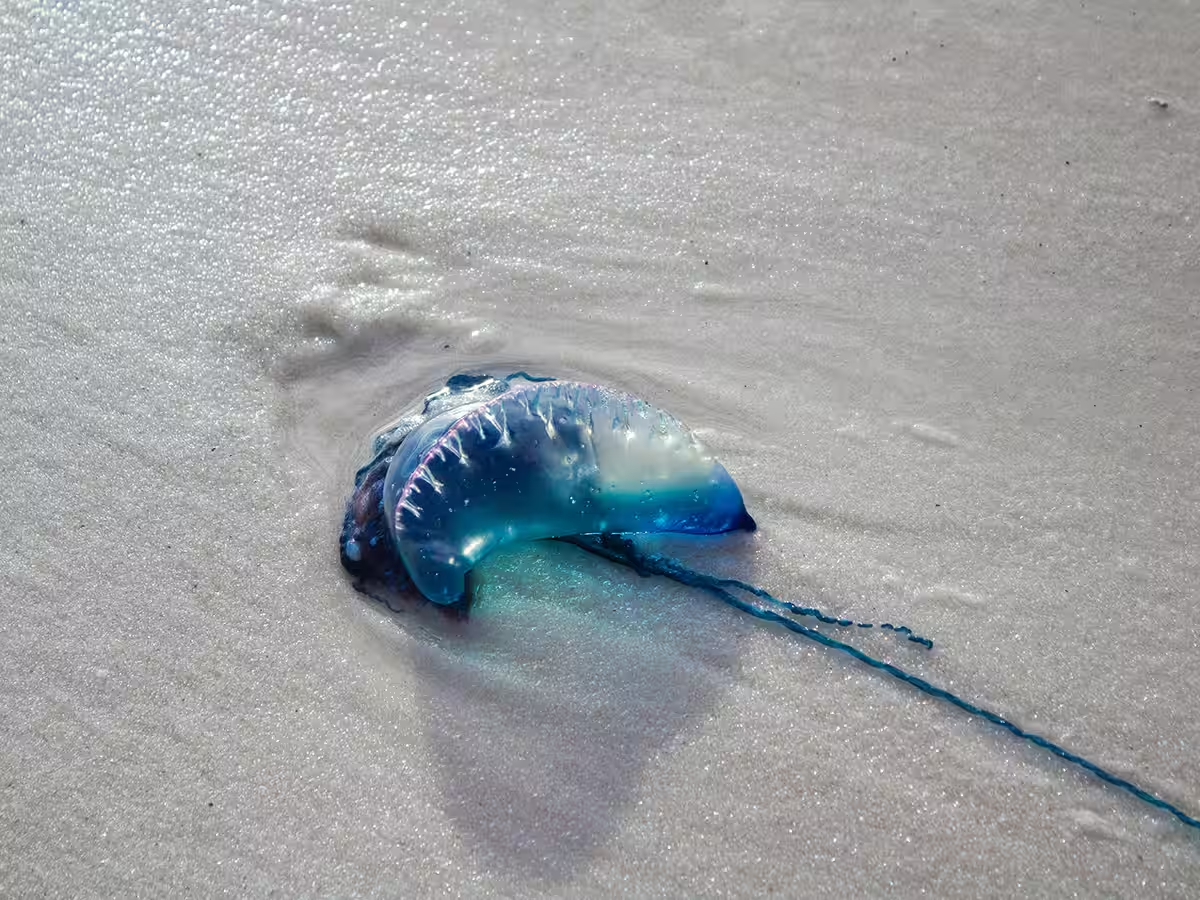
Despite their stunning electric blue appearance, both the portuguese man o' war and the blue dragon carry powerful stinging cells that can cause intense pain; always maintain a safe distance when spotting them.
Photo: Brianna Lengacher
Along coastlines around the world, especially in warm waters, a striking yet dangerous creature appears: the Portuguese man o' war. Often mistaken for a jellyfish, its bluish floating sac makes it visually appealing, but it is one of the most painful marine organisms humans can encounter.
What is the Portuguese man o' war?
It is not a single organism but a colony of specialized individuals working together. Its scientific name is Physalia physalis. It floats using a gas-filled bladder while its tentacles extend several meters below the surface.
Dangers to humans
Contact with its tentacles can trigger immediate reactions such as:
a) Intense burning pain
b) Red whip-like marks on the skin
c) Allergic reactions in sensitive individuals
d) In severe cases, breathing difficulty or cardiac issues
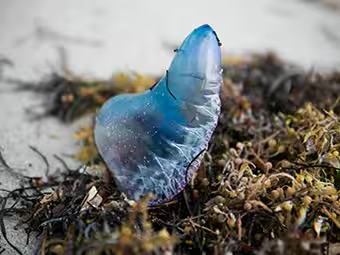
The deadly connection between blue dragons and man o' war
Photo: Foto de Enrique Ortega Miranda
Detached tentacles can still sting long after reaching shore.
The venom: how it works
Its tentacles contain nematocysts, which inject toxins upon contact. The venom affects the nervous system and skin, causing immediate pain and sometimes systemic symptoms.
Prevention: how to avoid stings
1- Avoid swimming when warnings are posted
2- Do not touch marine organisms on the beach
3- Wear protective swimwear in risk areas
4- Check local conditions before entering the water
For official safety guidance, visit https://www.noaa.gov
Treatment: what to do after a sting
1- Leave the water immediately
2- Do not rub the affected area
3- Remove tentacles carefully using tools
4- Rinse with seawater, not fresh water
5- Apply heat to relieve pain
6- Seek medical help if symptoms worsen
Avoid home remedies like urine or vinegar, as they may worsen the sting.
An increasingly common presence
Ocean warming and changing currents are contributing to more frequent sightings. Awareness and prevention remain key to enjoying the ocean safely.<
‼️ #ROCHA #PuntaDelDiablo Aparecen ejemplares de #FragataPortuguesa. Viene de zonas cálidas. Produce irritación altamente dolorosa en humanos. "Tiene tentáculos provistos de cápsulas urticantes denominados "cnidocitos" con los que puede paralizar a peces grandes" , explica la… pic.twitter.com/1ry13tXgxX
— Marcelo Umpierrez 📞099323625 (@emekavoces) February 18, 2024


See Also







Discovery Chepe
Most read...