



2026 Forecast: When Will the El Niño Phenomenon Return?
The End of La Niña: What to Expect for Global Climate in 2026
Reading time: 1 minute, Discovery Chepe Id-842-ECO
Published on 04-09-2026
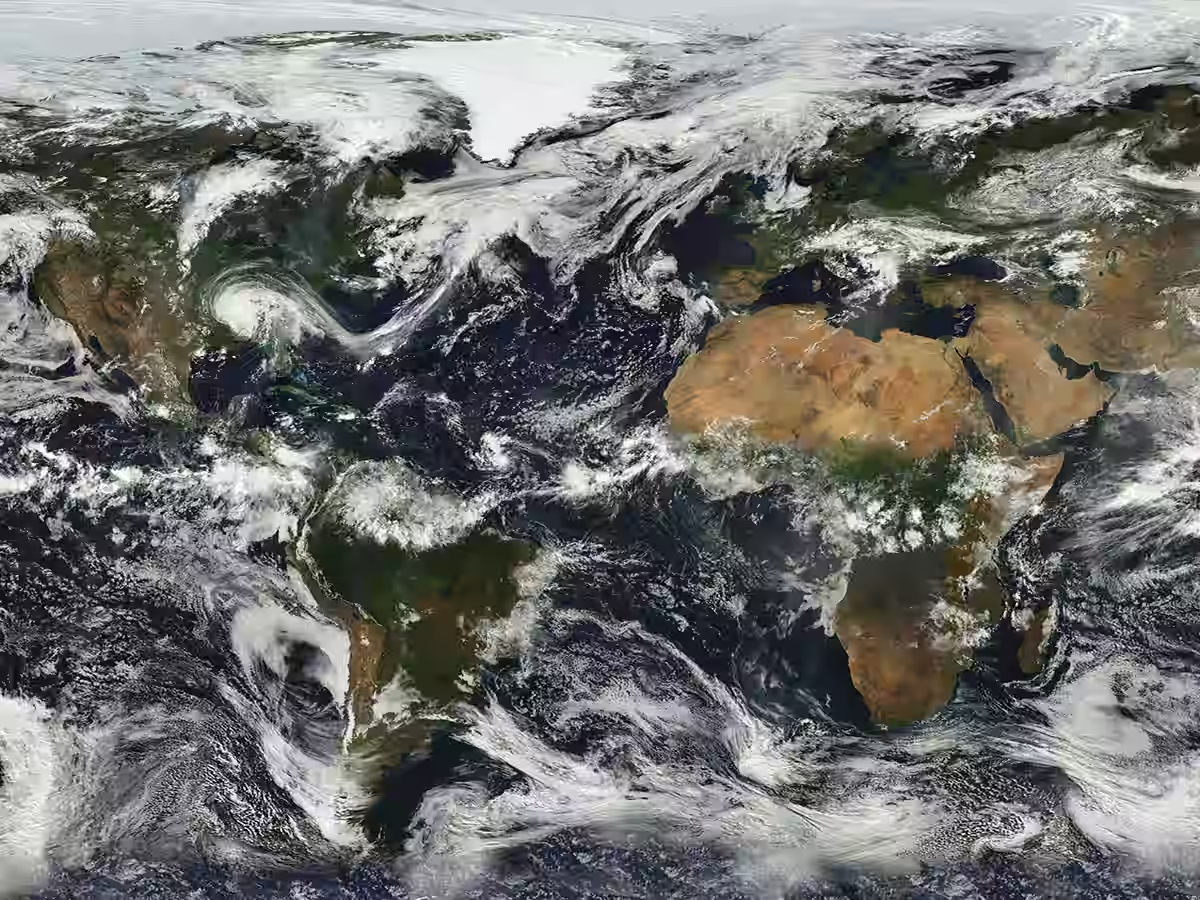
Thermal anomaly map of the Equatorial Pacific showing the projected transition to El Niño conditions for the second half of 2026. Photo: NASA
Global climate behavior in 2026 will be strongly influenced by the evolution of two key natural phenomena: 'El Niño' and 'La Niña'. Both are part of the ENSO cycle (El Niño-Southern Oscillation), affecting rainfall, temperatures, and extreme weather events worldwide. Experts warn that this year may represent a transition phase with mixed impacts already raising concerns.
What are 'El Niño' and 'La Niña'
'El Niño' is characterized by abnormal warming of Pacific Ocean waters, altering global weather patterns and causing heavy rains in some regions and droughts in others.
'La Niña', on the other hand, involves cooling of these waters, producing generally opposite effects.
More information is available at NOAA: https://www.climate.gov/enso

Climate Impact 2026: Rainfall and Temperature Predictions
Photo: Wade Austin Ellis
Climate forecast for 2026
International agencies suggest that 2026 may begin under neutral conditions following the weakening of 'El Niño'.
a) Early year: neutral conditions with cooling trend.
b) Mid-year: high probability of 'La Niña' development.
c) Late year: consolidation of a moderate 'La Niña'.
Expected regional impacts
1- Latin America: increased rainfall and hurricane activity later in the year.
2- United States: droughts in the south, colder winters in the north.
3- South America: shifting rainfall patterns affecting agriculture.
4- Asia and Oceania: higher flood risk due to increased rainfall.
Comparison between 'El Niño' and 'La Niña'
Ocean temperature: warming vs cooling.
Rainfall patterns: shifting distribution globally.
Hurricanes: decreased vs increased Atlantic activity.
Global temperature: rise vs moderation.
Economic and social impact
a) Agriculture: crop variability.
b) Energy: hydroelectric challenges.
c) Health: climate-related diseases.
d) Economy: price fluctuations.
More details: https://www.worldbank.org/en/topic/climatechange
Expert insights
Scientists highlight 2026 as a key transition year. Even moderate events could have amplified impacts due to climate change.
A year of constant climate monitoring
The potential rise of 'La Niña' will shape weather patterns globally, making preparedness essential.


See Also








Discovery Chepe
Most read...