



The Return of the American Bison to Mexico's Plains
Conservation Success: Bison in Northern Mexico
Reading time: 1 minute, Discovery Chepe Id-830-ECO
Published on 03-23-2026
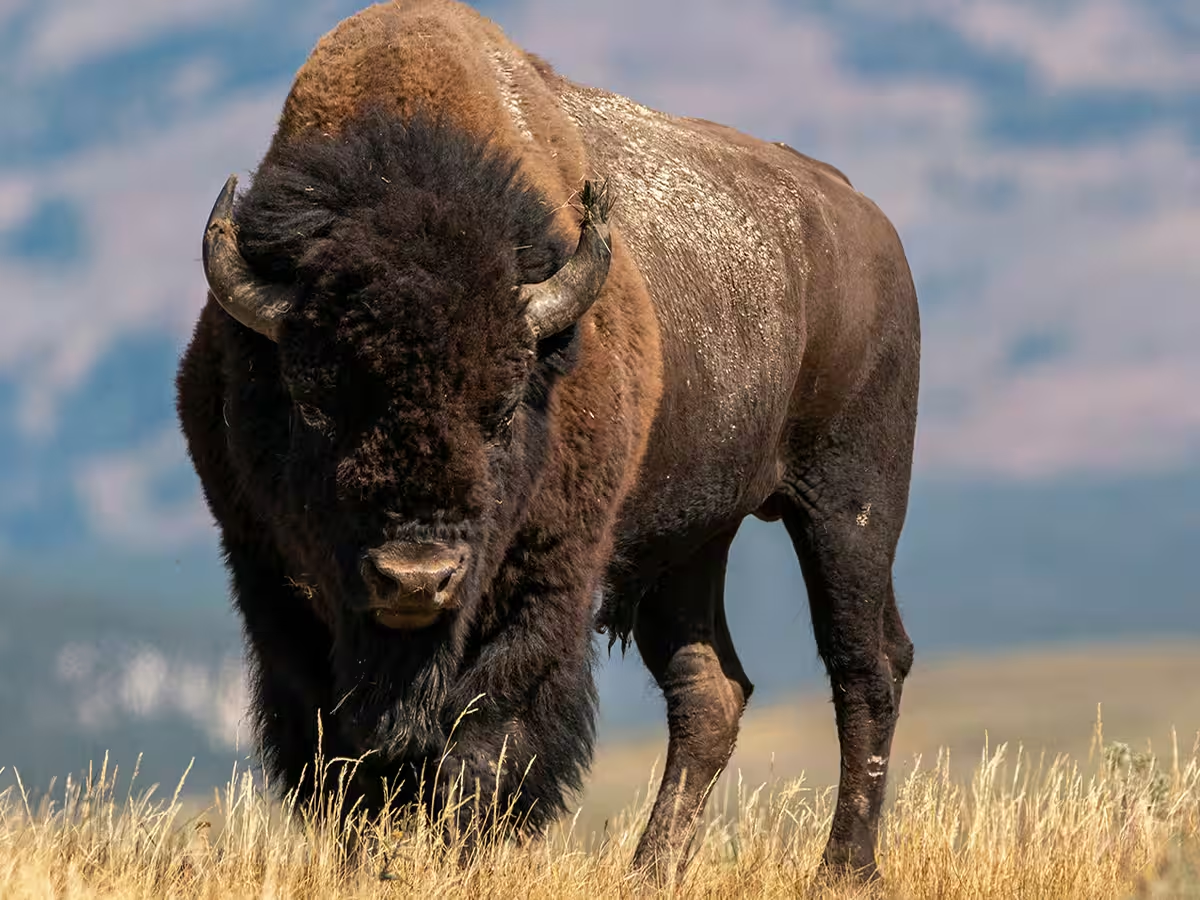
American bison in the grasslands of Coahuila, a symbol of conservation success and the return of a keystone species to its natural habitat. Photo: Goutham Ganesh Sivanandam
For centuries, the American bison roamed freely across northern Mexico, shaping ecosystems and sustaining biodiversity. By the late 19th century, however, overhunting and habitat loss pushed the species to near extinction in the region. Today, its return stands as a powerful example of successful conservation efforts.
From disappearance to recovery
The bison, scientifically known as Bison bison, vanished from Mexico around 1900. At its peak, the population exceeded 30 million across North America. Within a few decades, that number dropped dramatically to only a few hundred individuals.
The comeback began in the early 2000s through collaboration between governments, conservation groups, and local communities. A key milestone occurred in 2009 when 23 bison were reintroduced into the Janos Biosphere Reserve in Chihuahua.
Population growth: encouraging numbers
Since reintroduction, the population has steadily increased. Today, more than 200 bison are estimated to roam freely in northern Mexico, particularly in Chihuahua and Coahuila.
Key factors behind this success include:
Habitat protection: Protected natural areas provide safe environments for breeding.
Ongoing monitoring: Scientists track herds to ensure health and adaptation.
International collaboration: Cross-border cooperation supports genetic diversity and population management.
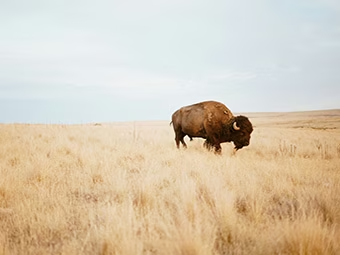
How Bison Are Restoring Coahuila's Ecosystems
Photo: Bryce olsen
Learn more at Mexico's National Commission of Natural Protected Areas.
Ecological impact
The return of the bison has broader ecological benefits:
1- They promote grassland regeneration through grazing.
2- They disperse seeds, enhancing biodiversity.
3- They create habitats for other species.
This makes them a keystone species essential for ecosystem balance.
Challenges ahead
Despite the success, challenges remain. Habitat fragmentation, climate change, and human activity continue to pose risks. Expanding ecological corridors and strengthening conservation policies are crucial next steps.
Community involvement has also played a vital role, with sustainable initiatives such as ecotourism supporting both conservation and local economies.
More information can be found at World Wildlife Fund.
An inspiring story
The return of the bison to northern Mexico is more than a biological recovery. It is a story of cooperation, science, and resilience. Each new calf represents hope and a renewed balance in nature.


See Also







Discovery Chepe
Most read...