



Colombia confirms euthanasia plan for Pablo Escobar’s hippos
Environmental crisis: Why euthanasia is necessary for Colombia's hippos
Reading time: 1 minute, Discovery Chepe Id-845-ECO
Published on 04-13-2026
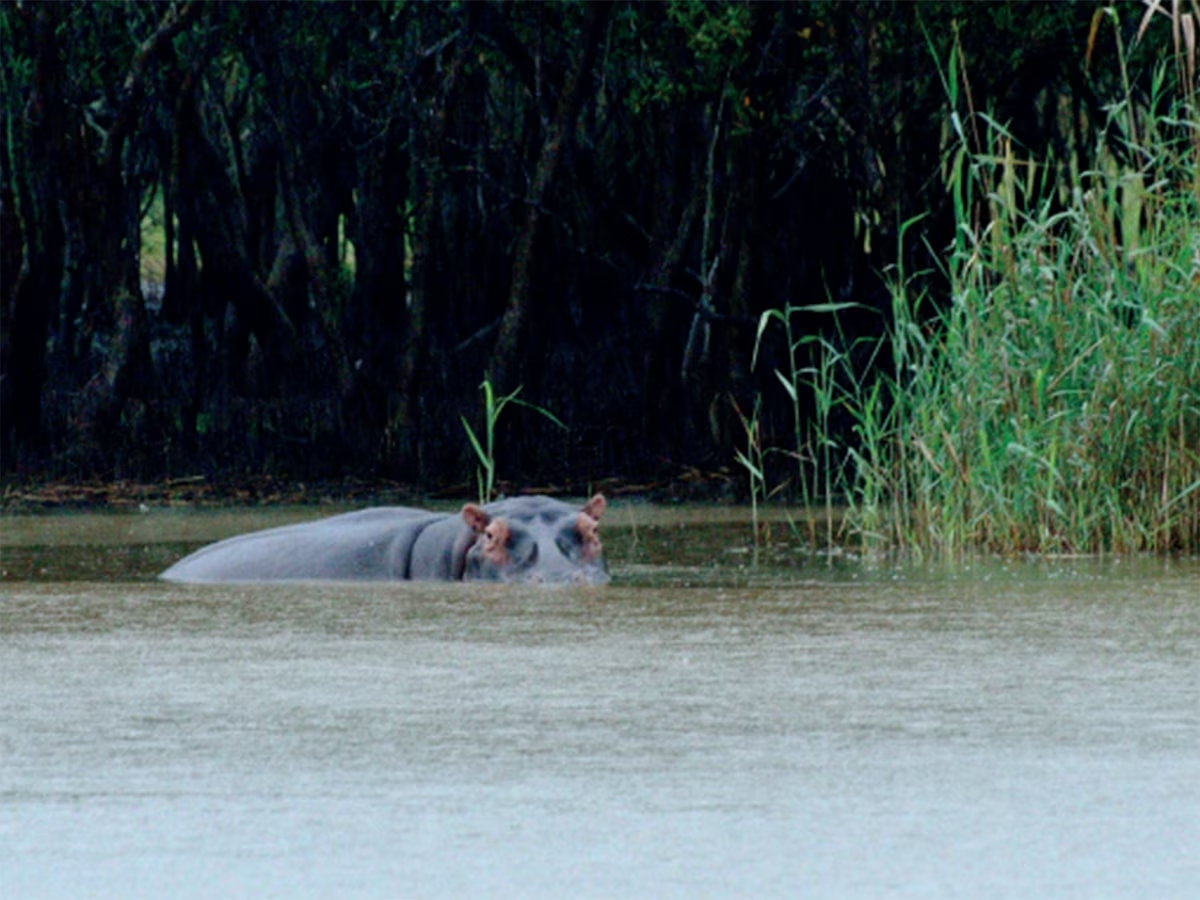
A group of hippos in the Magdalena River, where Colombian authorities have launched a management plan including euthanasia to protect native biodiversity. Photo: Colombian Ministry of Environment.
The Colombian government has sparked intense international debate after announcing the possibility of euthanizing the so-called 'Escobar's hippos', a population that has grown into a major environmental and social issue decades after the drug lord's death.
These hippos were introduced in the 1980s by Pablo Escobar at his Hacienda Napoles in Antioquia. After his death, the animals were left unmanaged and began reproducing rapidly in the Magdalena River basin, where more than a hundred individuals are now estimated to live.
An invasive species with growing impact
Authorities have classified these animals as an invasive species. Their presence disrupts local ecosystems, affects biodiversity, and poses risks to nearby communities.
Key impacts include:
a) Competition with native species for resources
b) Water contamination due to organic waste
c) Risk of attacks on humans and livestock
Experts warn that without intervention, the population could double in the coming years.
Hippos in Colombia: Euthanasia and sterilization as management tools
Photo: Colombian Ministry of Environment.
Euthanasia as a last resort
Given the difficulty of controlling the hippos through sterilization or relocation, authorities have proposed euthanasia as an extreme measure. This decision has triggered mixed reactions both domestically and internationally.
Animal welfare organizations oppose the measure, arguing that less drastic alternatives exist. Meanwhile, some scientists believe euthanasia is necessary to prevent irreversible ecological damage.
For official information on invasive species, visit:
https://www.minambiente.gov.co
Ethical debate and international pressure
The case has become a global symbol of modern challenges in managing exotic wildlife. Activists have launched campaigns to stop the euthanasia, while conservation experts emphasize the urgency of science-based decisions.
The dilemma raises complex questions:
1- Is it justifiable to eliminate a species to protect an ecosystem?
2- To what extent should humans correct their own past actions?
3- Are there sustainable long-term solutions?
The future of hippos in Colombia
As the debate continues, time is a critical factor. New calves are born each year, worsening the situation. Authorities must balance environmental conservation with animal ethics in a decision that could set global precedents.
This story also highlights the unintended consequences of human intervention in nature and how past decisions can evolve into present-day crises.


See Also








Discovery Chepe
Most read...