



Modern warfare: From infantry soldiers to autonomous machines
Drones and unmanned systems: The new era of warfare
Reading time: 1 minute, Discovery Chepe Id-843-SOC
Published on 04-09-2026
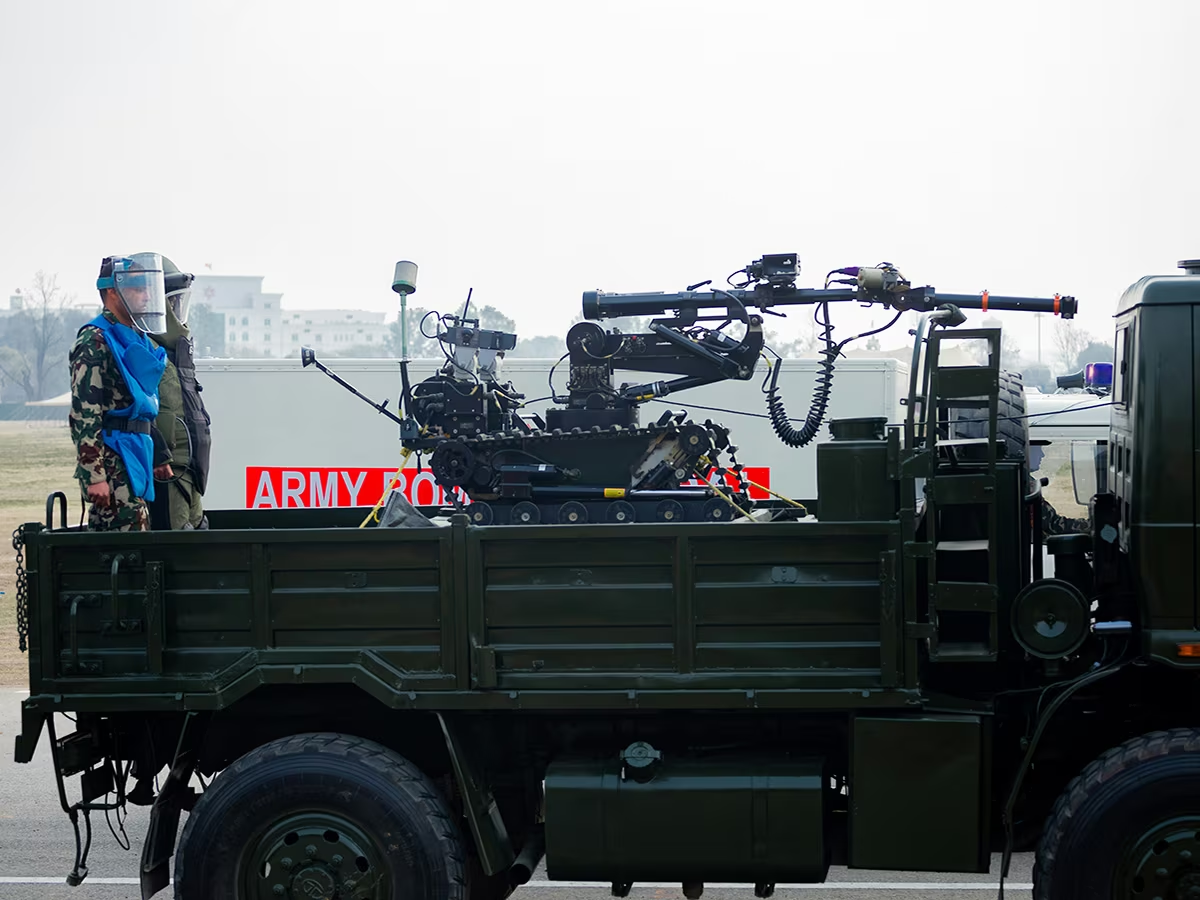
The deployment of unmanned systems and reconnaissance robots is transforming logistics and precision in high-intensity conflict zones. Photo: Sushanta Rokka
Warfare has undergone a radical transformation in the 21st century. What once depended entirely on human soldiers now increasingly relies on automated systems, artificial intelligence, and autonomous robots capable of making real-time decisions. This technological shift is redefining military strategies and raising deep ethical questions about the future of armed conflict.
The rise of automation in combat
In recent years, military powers have invested billions in technologies designed to reduce human presence in high-risk zones. The goal is clear: minimize casualties and increase operational efficiency.
a) Unmanned ground vehicles: robots like THeMIS can transport supplies, evacuate casualties, and even operate weapons remotely.
b) Combat drones: UAVs such as the MQ-9 Reaper perform surveillance, reconnaissance, and precision strikes without onboard pilots.
c) Autonomous naval systems: unmanned vessels now patrol strategic waters and detect underwater threats.
The impact of autonomous vehicles on today's armed conflicts
Photo: Sufyan
Artificial intelligence: the brain behind machines
The real breakthrough lies not only in hardware but in software. Artificial intelligence allows these systems to process massive data sets, identify targets, and adapt actions based on changing environments.
1- Real-time facial and pattern recognition.
2- Predictive analysis to anticipate enemy movements.
3- Coordination among multiple autonomous units in swarms.
These developments have led to what is known as algorithmic warfare, where critical decisions can be made in milliseconds.
Lethal autonomous weapons: a global debate
One of the most controversial issues is the development of lethal autonomous weapons capable of selecting and attacking targets without direct human intervention. This has raised concerns in international organizations such as the United Nations.
Experts warn that delegating life-and-death decisions to machines could have unpredictable consequences. Organizations like the International Committee of the Red Cross call for stricter regulations.
Examples of current technologies in use
Several tools are already being deployed in real conflicts:
a) Loitering munitions like Switchblade drones.
b) Autonomous bomb disposal robots.
c) Automated defense systems such as Iron Dome.
Experimental projects are also developing drone swarms that operate as a single coordinated unit, adding a new dimension to military strategy.
Impact on soldiers and military strategy
The role of the traditional soldier is evolving. Many now operate from control centers, supervising remote systems instead of being on the front line. This shift changes both training and combat psychology.
At the same time, the speed of warfare has increased dramatically, favoring automated decision-making over human response times.
Risks and challenges of automated warfare
Despite its advantages, robot-based warfare carries significant risks:
1- System failures leading to collateral damage.
2- Vulnerability to cyberattacks.
3- Escalation of conflicts due to automated decisions.
Balancing innovation with responsibility will be crucial in the coming years.
A future dominated by machines
Modern warfare is no longer just a clash between armies, but between algorithms and intelligent systems. As technology advances, the human role on the battlefield is likely to diminish even further.
This transformation is reshaping not only how wars are fought, but how they are understood in a world where the line between human and machine continues to blur.
The U.S. Army just turned drone procurement into an online marketplace.
— The Droning Company (@DroneCompany11) April 7, 2026
Faster access = faster innovation… and more competition.
This could reshape how drone tech scales globally.
👉 Read: U.S. Army Launches Online Drone Marketplace. Link in bio.#MilitaryDrone #DefenseTech pic.twitter.com/Nde6QswYxg


See Also





Discovery Chepe
Most read...